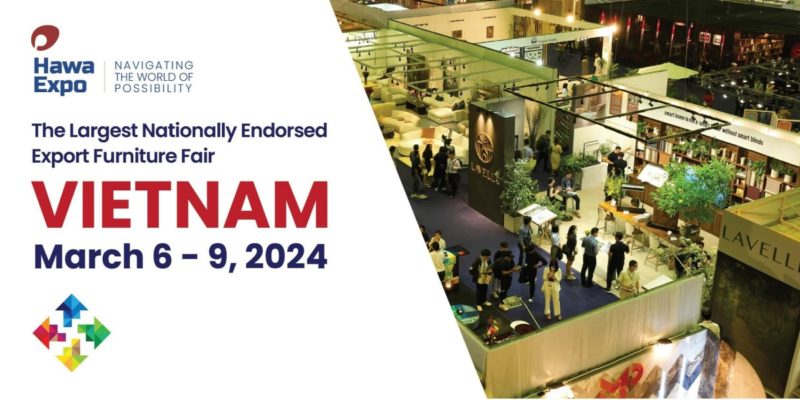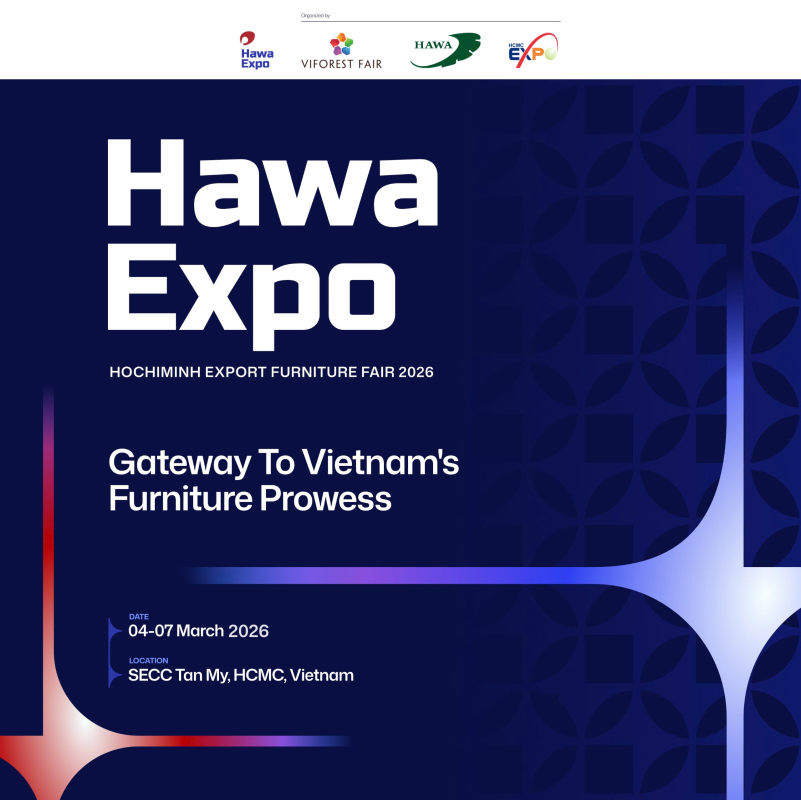
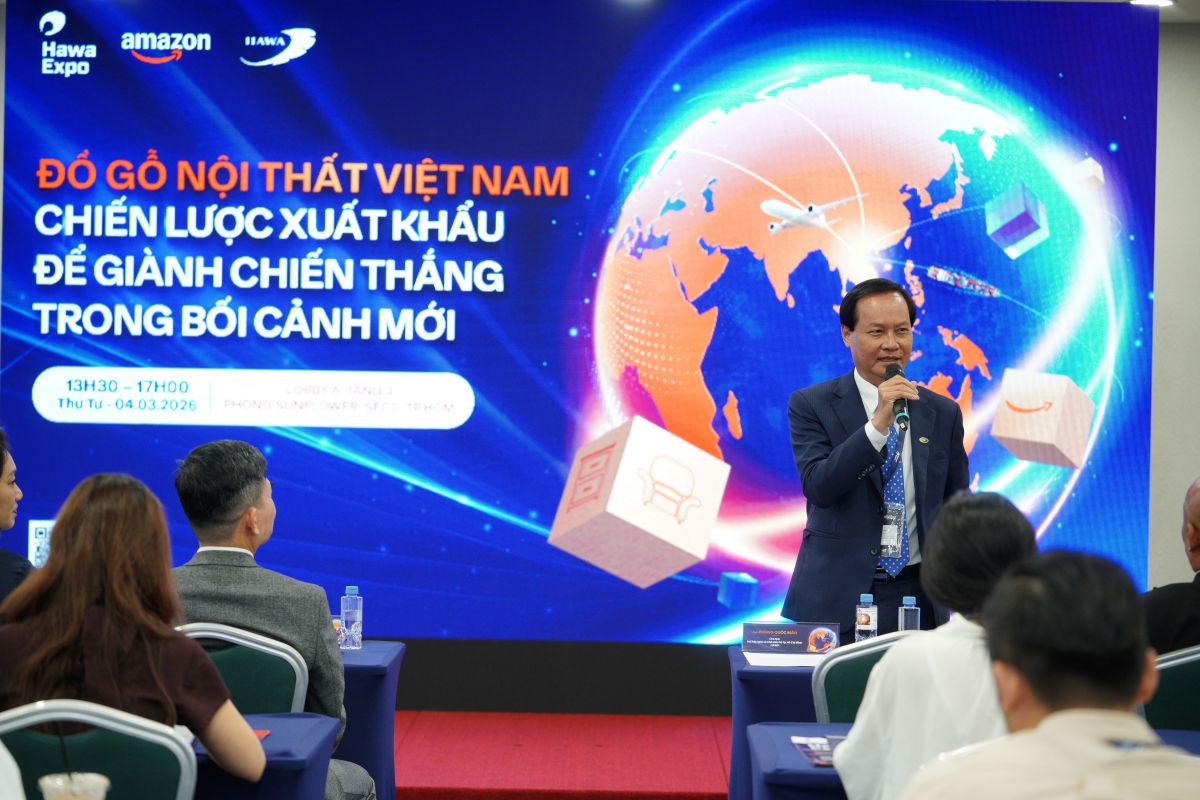
Within the framework of HawaExpo 2026, a specialized seminar titled “Vietnamese Furniture – Export Strategies to Win in the New Context” gathered industry leaders, experts, and businesses to discuss emerging opportunities for Vietnam’s wood and furniture sector. The discussion highlighted how cross-border e-commerce is becoming an important pathway for Vietnamese manufacturers to expand globally, build their own brands, and gain greater control over the value chain.
The seminar brought together representatives from Handicraft and Wood Industry Association of Ho Chi Minh City (HAWA), experts from Amazon Global Selling Vietnam, and several export-oriented furniture companies. Through case studies and practical insights, speakers examined the challenges and opportunities businesses face as they transition from traditional B2B manufacturing toward direct-to-consumer global retail.
Online retail opens new growth potential
According to Mr. Tran Lam Son, Executive Committee Member of HAWA, Vietnam’s wood and furniture industry currently records annual export turnover of around USD 17 billion, placing it among the country’s key export sectors. Despite this impressive figure, global competition is intensifying, while trade barriers and market volatility are increasing.
For decades, many Vietnamese manufacturers have operated primarily as OEM producers for international brands. While this model ensures stable production volumes, it also limits brand ownership and pricing power.
“Vietnamese companies should aim to transform the vision of ‘Made in Vietnam’ into ‘Made by Vietnam’,” Mr. Son emphasized. “This means that Vietnamese businesses not only manufacture products but also develop their own brands and sales channels in the global market.”

Traditionally, most Vietnamese furniture exporters rely on the B2B model, selling products through importers, distributors, or international retail chains. Although effective in maintaining export volumes, this model creates heavy dependence on a limited number of partners and exposes businesses to price pressure and strict payment terms.
In this context, cross-border e-commerce platforms are emerging as a powerful new channel that allows companies to sell directly to global consumers while building independent brands.
According to representatives from Amazon Global Selling Vietnam, online retail markets in the United States and other developed countries operate with year-round shopping cycles, punctuated by major sales events such as Prime Day and Black Friday. These events can generate massive spikes in demand when businesses are well prepared in terms of inventory, product presentation, and advertising strategies.


To illustrate the scale of opportunity, during Prime Day 2024, global consumers purchased more than 200 million products in just two days, generating approximately USD 14.2 billion in revenue. This figure is nearly equivalent to the annual export value of Vietnam’s entire wood industry. Such statistics demonstrate the enormous potential of global e-commerce for Vietnamese manufacturers.
From B2B manufacturing to direct retail
A notable example shared during the seminar was the journey of Green Mekong, a furniture brand established in 2024 with the goal of selling directly to international consumers through e-commerce platforms.
The brand was developed from the manufacturing foundation of Thien Minh Furniture, a company with nearly two decades of experience exporting indoor and outdoor furniture to Europe and the United States under the traditional B2B model. Launching a direct-to-consumer brand marked a strategic experiment to access the global retail market.

Despite these challenges, the company achieved around USD 1 million in sales on Amazon within just over a year, with a team of only four members. The brand now targets USD 6 million in revenue by 2026, reflecting the strong growth potential of the model.
Opportunities come with operational challenges
Speakers at the seminar emphasized that moving from B2B exports to B2C retail involves far more than simply adding a new sales channel. It requires significant adjustments in product management, branding, and customer experience.
Under the B2B model, product design is typically guided by the specifications of importers or retail chains. In contrast, selling directly to consumers requires companies to conduct their own market research, manage branding strategies, and oversee the entire customer journey.

Elements such as packaging design, assembly instructions, product reviews, and after-sales service play a crucial role in determining success on e-commerce platforms.
Ms. Lam Giang shared that in the early stages, her company encountered quality control challenges when applying B2B production standards to retail products. Customer feedback forced the team to redesign packaging, adjust product features, and even discontinue certain product lines in order to improve user experience.

These lessons highlight the need for companies to better understand consumer behavior and respond quickly to market data when operating in the online retail environment.
In addition, cross-border e-commerce also requires strong financial planning. According to industry experts, maintaining sufficient inventory is critical to sustaining growth on online platforms. If a best-selling product goes out of stock, its ranking can drop rapidly, and recovering that position can be difficult.
A multi-channel strategy for future growth
A key takeaway from the seminar is that e-commerce does not necessarily replace traditional export channels. Instead, it should be viewed as a complementary strategy that helps businesses diversify markets and reduce reliance on a limited number of international buyers.
By combining B2B exports with B2C e-commerce, companies can maintain large-volume orders from established partners while simultaneously building independent brands and engaging directly with global consumers.

Moreover, sales data from e-commerce platforms provides valuable insights into consumer preferences, enabling businesses to test new products and respond more quickly to market trends.
Amid the rapidly changing global trade landscape, discussions at the seminar reaffirmed that cross-border e-commerce is becoming an increasingly important pathway for Vietnamese furniture companies. By leveraging digital platforms and developing their own brands, Vietnamese manufacturers can gradually shift their role in the global value chain—from simply producing goods to actively shaping and owning the identity of Vietnamese products worldwide.